There are no items in your cart
Add More
Add More
| Item Details | Price | ||
|---|---|---|---|

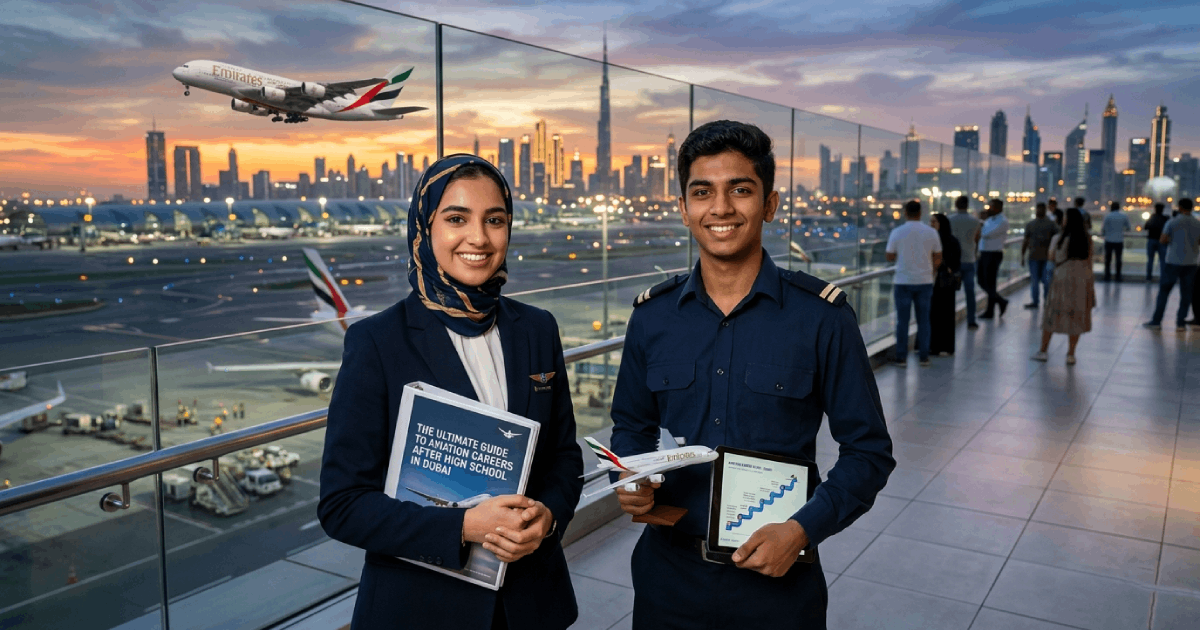
You've just finished high school. The exams are done, the results are in, and now comes the biggest question of your life: What next?
If you've ever looked up at the sky and felt that magnetic pull — that quiet but insistent curiosity about what it takes to be part of the world above the clouds — then this guide was written for you. Dubai is one of the most extraordinary places on the planet to begin an aviation career, and the good news is that you don't need years of prior experience or a university degree to take your first step. You just need the right information, the right training, and the right mindset.
Let's walk through everything you need to know — from why Dubai is your best starting point, to the exact roles available to fresh graduates, to the certified training pathways that can take you from the classroom to the cockpit (or the control tower).
There's a reason aviation professionals from over 100 countries choose Dubai as their career base. This city isn't just connected to the world — it is a connector. Dubai International Airport (DXB) has consistently ranked among the busiest international airports on the planet, handling tens of millions of passengers annually. Add to that Al Maktoum International Airport (DWC), which is set to become the world's largest airport when fully operational, and you begin to understand the scale of opportunity here.
But it goes deeper than infrastructure. Dubai's aviation ecosystem is uniquely layered:
Emirates and flydubai are two of the world's most recognized airlines, both headquartered here. Emirates alone operates one of the largest long-haul fleets globally. These are not just employers — they are aviation institutions that shape industry standards.
The UAE's geographic position places it at the crossroads of Europe, Asia, and Africa. Dubai sits within an 8-hour flight of two-thirds of the world's population. This makes it not just a hub for passengers, but a strategic base for cargo, business aviation, MRO (Maintenance, Repair and Overhaul), and aviation training.
Government investment in aviation has been significant and sustained. The UAE's General Civil Aviation Authority (GCAA) and the Dubai Civil Aviation Authority (DCAA) have established rigorous regulatory frameworks that ensure training and employment standards are world-class. This is critical: when you earn a qualification approved by these bodies, it carries international weight.
The aviation training sector is thriving. Dubai is home to multiple ICAO-compliant training centers, simulator facilities, and specialist aviation institutes — including Air Traffic World Aviation (ATW), which is dedicated to preparing the next generation of aviation professionals.
For a high school graduate in the UAE, this environment is unmatched anywhere in the world. The infrastructure is here. The employers are here. The training pathways are here. All that's missing is you.
One of the most common misconceptions about aviation is that it's only for pilots. In reality, a modern airport is a complex ecosystem that requires hundreds of different roles — many of which are highly accessible to school leavers with the right attitude and the right training.
Here are some of the most promising entry-level aviation roles for UAE high school graduates:
This is one of the most popular entry points into aviation for school leavers, and for good reason. Cabin crew roles offer international exposure, competitive compensation, and a dynamic work environment. Requirements typically include a minimum of a high school diploma, fluency in English, and completion of a certified safety training program.
Understanding passenger safety, handling in-flight incidents, and managing conflict professionally are all skills that can be developed through structured training. ATW's Cabin Crew PMVA Self-Defence and Restraint Methods course is specifically designed to equip cabin crew trainees and active crew with the physical and psychological tools to handle disruptive passengers safely and professionally.
ATC is one of the most intellectually demanding and rewarding roles in aviation. While becoming a fully licensed Air Traffic Controller requires structured training and examinations, there are entry-level pathways for school leavers who want to work toward this career.
The ICAO ATC Basic Induction (051) Course is the foundational programme for anyone looking to enter air traffic management. This GCAA-aligned course introduces trainees to the core principles of ATC operations, radiotelephony, and aviation law — and it's available in Dubai through ATW Aviation. For more background on the ICAO 051 programme, you can also read ATW's detailed blog: ICAO 051 Course Requirements, Benefits & Why It Matters.
Ground handling is the backbone of airport operations. Ramp agents are responsible for loading and unloading baggage, marshalling aircraft, coordinating fuelling, and more. These roles are physically active and provide direct exposure to aircraft operations. Many senior aviation professionals started right here.
Aviation security is a critical and growing field. Entry-level security officers work at passenger screening, access control, and perimeter patrol. The Level 2 International Award in Security Guarding offered by ATW Aviation — accredited through Highfield Qualifications — is a globally recognized certification for those entering aviation security.
For those with aspirations in high-profile or VIP aviation security, the Close Protection and Air Marshal Security course offers specialist training in one of aviation's most demanding roles.
Flight dispatchers work closely with pilots and operations teams to plan safe, efficient flights. This role requires a strong understanding of weather, NOTAMs, fuel planning, and aviation regulations. It's a fantastic entry point for those with an analytical mindset and a passion for the operational side of flight.
Strong Aviation English communication skills are essential in this role — accurate, standardized communication is not optional in aviation; it's a safety requirement.
For school graduates with a passion for engineering and mechanics, aircraft maintenance is a highly technical and well-compensated career path. It typically requires enrollment in a certified AME programme following high school, but the foundation can be laid early with the right training choices.
Here's something every aspiring aviation professional in the UAE needs to understand clearly: not all training is equal.
In aviation, certifications matter enormously. A course that isn't recognized by the relevant civil aviation authority won't carry weight with employers — and in some roles, it's a legal requirement to hold approved qualifications before you can work.
In the UAE, the two principal regulatory bodies are:
When choosing a training provider, always confirm that:
✅ The course is aligned with ICAO standards
✅ The training organization is approved or recognized by GCAA or DCAA
✅ The certification you'll receive is internationally transferable
ATW Aviation is built around these standards. Our courses — from the ICAO ATC 051 Basic Induction to Safety Management Systems — are designed to meet the regulatory expectations of both UAE authorities and global aviation employers.
Why does this matter so much for school leavers specifically? Because your qualifications are your credentials. When you're starting out without years of work experience, the letters and logos on your certificate tell employers everything they need to know about your preparation, your seriousness, and your professional standards.
Beyond compliance, GCAA and DCAA-approved training means you're learning what the industry actually needs — current procedures, real standards, and up-to-date safety practices. Aviation is not a field where outdated knowledge is tolerated. A Safety Management System (SMS) failure or a lapse in fatigue and stress management can have real-world consequences. Employers know this — and so should you.
For further reading on the regulatory framework, the ICAO official website is an excellent resource to understand international standards, and the GCAA's official portal offers clear guidance on approvals, licensing, and UAE-specific requirements.
So you have your high school diploma in hand. What does the practical path actually look like? Let's map it out.
Aviation is broad. Before investing time and money into training, spend some time reflecting on what excites you most. Is it the technical challenge of controlling air traffic? The human-facing experience of working with passengers? The engineering complexity of aircraft systems? The security and safety dimension?
Your answer will shape your entire journey. Talk to professionals in the field if you can — LinkedIn is a great tool for this. The ATW Aviation blog also offers in-depth perspectives on different career paths, from physiotherapy in aviation (yes, it's a real and growing field) to aircraft evacuation management and aviation air law.
This step is non-negotiable. English is the universal language of aviation. ICAO mandates a minimum Language Proficiency Level 4 for anyone working in an operational aviation role that involves radiotelephony communications. This applies to pilots, ATC officers, and many others.
If English is not your first language — or even if it is but you've had limited formal training in aviation-specific English — completing an Aviation English Communication course is one of the smartest early investments you can make. Dubai has excellent options for English language proficiency classes tailored to aviation professionals.
Clear, accurate communication isn't just about passing an exam — it's about safety. Miscommunication is one of the leading contributing factors in aviation incidents. When you train your language skills in the context of aviation, you're training for real-world performance.
For most school leavers, the ICAO ATC 051 Basic Induction Course is an excellent starting point if your ambitions lie in air traffic management. For cabin crew aspirants, a combination of safety procedures training and PMVA self-defence certification will set you apart from untrained applicants. For security roles, the Level 2 International Award in Security Guarding provides the Highfield-accredited foundation employers expect.
You can explore the full range of ATW Aviation's course offerings here.
Even before you enter the workforce, understanding aviation safety culture will distinguish you from other candidates. Aviation is an industry where safety is not a department — it's a value that permeates every decision, every communication, every checklist.
Familiarizing yourself with Safety Management Systems (SMS) and the principles of fatigue and stress management in aviation will not only make you a safer professional — it will make you a more attractive candidate to employers who take safety culture seriously.
Our blog on Safety and Emergency Procedures is a great place to start building this awareness.
Dubai's aviation community is large but connected. Attend open days, join aviation groups on LinkedIn, and reach out to professionals for informational interviews. When you're ready to apply, target employers who actively recruit school leavers and fresh graduates — Emirates, Air Arabia, dnata, and Serco UAE are all known to have structured entry-level pathways.
Tailor your CV to highlight your certified training, your English proficiency level, and any relevant soft skills: communication, teamwork, composure under pressure. These matter enormously in aviation.
If you're thinking about a long-term leadership or training path, also consider exploring Train the Trainer programmes — once you have some years of experience, the ability to train others is a significant career multiplier. You can read more about this pathway in ATW's detailed blog on Train the Trainer.
Aviation is a career that grows with you. The school leaver who starts as a ground handler can become a station manager. The ATC trainee who passes the 051 course can advance to senior controller. The cabin crew member who masters safety and service can become a crew trainer, a safety officer, or even transition into aviation management.
What makes Dubai exceptional is that these trajectories aren't theoretical — they happen here, regularly, to people who started with nothing but a high school diploma and a commitment to learning.
The runway is open. The sky is clear.
Contact ATW Aviation today to find out which course is the right starting point for your aviation career in Dubai.
Explore more from the ATW Aviation knowledge hub: